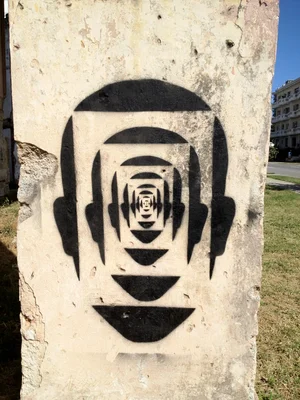
scaling up the place of sound
over the past several years, the place of sound has grown from a course-adjacent radio project into a platform that supports student audio work across multiple programs at carleton university. what began as a space for sound-based experimentation within my own communication and media studies courses is now increasingly shaped by collaborations that cross disciplinary, methodological, and pedagogical boundaries.
this shift has been deliberate. rather than positioning the show as a single-course outlet, the place of sound now operates as a shared infrastructure: a public-facing space where students from different programs can publish audio work that is grounded in critical inquiry, attentive listening, and community engagement.
collaborative work across the university
over recent years, episodes have emerged through collaborations with students and instructors working in architecture and urbanism, media production and design, and social work, among others. these projects bring distinct ways of thinking about space, materiality, and public life into conversation through sound.
we have also partnered with campus initiatives and cultural institutions, including the carleton university art gallery (CUAG), where student audio pieces have responded directly to exhibitions and curatorial themes. other collaborations have engaged with research-driven initiatives such as the urban imaginaries project, extending the life of academic work through accessible, creative audio forms.
what links these projects is not a single format or aesthetic, but a shared commitment to listening as a method. students are invited to treat sound not as an add-on or technical skill, but as a way of thinking that surfaces spatial, social, and political questions often flattened by text-based modes of inquiry.
a platform designed for teaching
as the show has scaled up, its role has become clearer. the place of sound is not simply a repository for finished audio pieces. it’s a pedagogical framework that instructors can integrate into their courses in flexible ways.
for some courses, this means producing a short soundscape or audio essay as a capstone assignment. for others, it involves collaborative episodes tied to a shared theme, site, or research question. in all cases, students work toward a public outcome, learning how to shape their ideas for an audience beyond the classroom while remaining grounded in theory and critical reflection.
importantly, the show remains student-led. student hosts and producers play a central role in shaping editorial direction, mentoring peers, and maintaining the rhythms of production and publication. this continuity has been essential in allowing the project to grow without losing its pedagogical focus.
looking ahead
as the place of sound continues to evolve, the goal is not scale for its own sake. the aim is to support thoughtful, well-situated audio work that reflects the diversity of teaching and research happening across the university.
instructors interested in affiliating their courses or projects with the show are encouraged to think of it as a collaborative space, one that can adapt to different disciplinary contexts while maintaining a shared commitment to listening, place, and public scholarship.
further information about collaborations and past episodes can be found under the “collaborations” section of the website. and materials for instructors, including the instructor handbook for getting involved in the place of sound, are available here.